Tuesday, 30 July 2013

The Iceman : Reviews

The Iceman
                  Cast : Michael Shannon, Winona Ryder,
                            Ray Liotta, Chris Evans

 
Direction : Ariel  Vromen
Story : Can you ever escape who you really are? The film is a crime biopic on hitman Richard Kuklinski, who adored his family, but didn't regret killing over 100 people, for money, out of anger or just to cover up his own crimes!

Movie Review : The film gives a disturbing account of Kuklinski's life from being a porn distributor to becoming one of the most diabolical contract killers in American history. Since he kept his family in the dark, they continued to live off his blood money until he got arrested in 1986 in an undercover operation. How he led a double life all those years - by playing a doting family man and a cold-blooded killer - is what forms the story.

The Iceman is grim, dark and gritty. A certain sense of paranoia engulfs the proceedings, which helps build the psychological tension. Vromen manages to capture the period setting required. The background score is unsettling and does complete justice to the film's creepy theme. Michael Shannon is outstanding as the devilishly smooth deadpan psychopath, as passionate about the wellbeing of his family as about staring at his victims before he brutally murdered them. He gives a solid performance as the soulless, unsmiling man who solely cared for his family and had no qualms about confessing he felt that way, either.

Shannon arrests your attention and sends shivers down your spine with his impeccable portrayal, especially in scenes where he struggles to hide his inner monster from his family. However, the film becomes sluggish after a while as the script relies heavily on Shannon's acting. The story runs out of steam as you sit through a series of generic mafia wars and killings. The scenes start looking repetitive and events monotonous. Fortunately, it all culminates in a gripping climax.

Winona Ryder as Kuklinski's wife and Ray Liotta are effective. Chris Evans and James Franco make special appearances, making you wonder why they did so! The film works as a documentary.

However, it fails to dramatise the character in order to evoke an audience reaction, which is what is usually expected from crime thrillers.

Pacific Rim : Reviews

Pacific Rim
Cast:Burn Gorman, Charlie Day, Charlie Hunnam, Idris Elba, Rinko Kikuchi, Ron Perlman 
Director: Guillermo del Toro

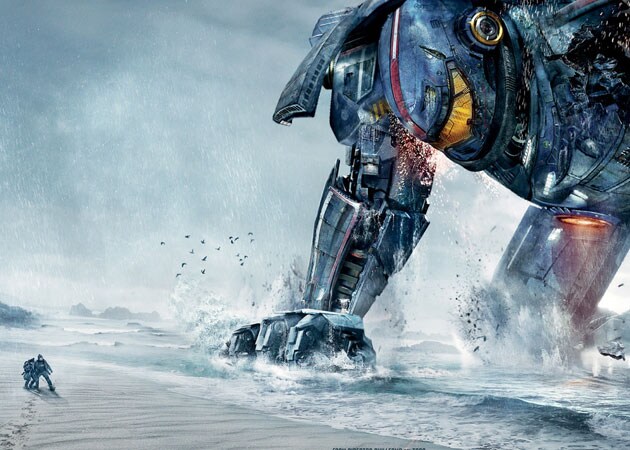
Viewed from one angle - from below, say, as you cower before the Imax screen, your 3-D glasses digging into the bridge of your nose, condensation from your Diet Coke dripping onto your leg - Pacific Rim looks a lot like other movies of its type. Dinosaurish creatures as big as skyscrapers do battle with equally gigantic robots on land and sea, pulverizing familiar cities and churning up geysers of spume. Human characters (some of whom are actually inside the giant robots) bark out catchphrases, spout fake science and express noble sentiments as they fight to save the planet. More than two hours of your life elapse before they do.

So consider yourself warned. If you walk in expecting subtlety, or even novelty, you may find yourself more tormented than entertained. But Pacific Rim is also a reminder - either just in time or much too late - that this kind of movie can and should be fun. Some of those catchphrases are mildly clever. The lab coat mumbo-jumbo is amusing. The noble sentiments touch sweet chords. And who does not delight in seeing a robot punch a dinosaur every now and then - or pretty much constantly for two hours?

The director, Guillermo del Toro (who wrote the script with Travis Beacham), is an unabashed genre enthusiast and a feverish inventor of fantastical worlds, enchanted by the visual and symbolic power of monsters and intoxicated by his own imagination. It is true that he has employed that imagination to more memorable effect in other movies, notably the wonderful Hellboy pictures and the shattering Spanish Civil War horror-allegories Pan’s Labyrinth and The Devil’s Backbone. Admirers of those films may find this one crude and overscale by comparison. Still, Pacific Rim, with its carefree blend of silliness and solemnity, is clearly the product of an ingenious and playful pop sensibility.

“But Gipsy is analog!” This exclamation, though not immediately intelligible out of context (or in it, for that matter), is in some ways the key to the movie. A bit of explanation is in order, though I’m afraid it will not be as exhaustive or as breathless as the voice-over narration that begins the movie or the expository dialogue that pops up throughout. Gipsy is a Jaeger, one of the enormous metal bipeds built to fight off the Kaiju, horrible creatures who have popped up through the bottom of the Pacific Ocean via a portal to their native dimension.

Still with me? The Kaiju are, as alien invaders tend to be, quite hostile. They are also diabolically clever, evolving quickly in response to military attempts to defeat them. After a long war of attrition (dramatized in a precredit chunk that is almost a movie in itself), only a handful of Jaegers remain, concentrated in Hong Kong for a last stand against the enemy. Commanded by the wondrously named Stacker Pentecost (Idris Elba), the Jaeger pilots - who must work in pairs assisted by technology that links their brains - are a motley global crew. Our attention is particularly focused on Raleigh Becket (Charlie Hunnam) and Mako Mori (Rinko Kikuchi), who seem to have especially traumatic experiences with Kaiju in their pasts.

There is also an Australian father-son team (Max Martini and Rob Kazinsky) - Raleigh and the son, who are hard to tell apart, trade a few punches at one point - and a duo of manic, mismatched scientists (Charlie Day and Burn Gorman) for comic relief. Hellboy himself (that is, Ron Perlman) shows up as a local underworld figure, doing more for the film’s attitude than for its plot. Wearing dark glasses and metal-toed shoes and spouting Runyonesque gangster gibberish, he reminds you that Pacific Rim is, more than anything else, a cartoon.

Which brings me back to the analog identity of Gipsy, which is able to keep fighting when some bad Kaiju mojo shuts down the fancy digital Jaeger. Pacific Rim is loaded with computer-generated imagery, but its soul is proudly mechanical. Its off-kilter sense of proportion harks back to the inspired models and stop-motion techniques of the late special-effects maestro Ray Harryhausen. Even in 3-D (which does not add much of interest), the images are composed of bright tones and blocky shapes, like old comic-book panels. And this future, for all the talk of “neural drift” and dimensional wormholes, is a world of tubes and rivets and pistons. Jules Verne and HG Wells would appreciate it.

The pleasures of Pacific Rim, in other words, are somewhat nostalgic, and maybe also regressive. This in itself is hardly unusual: Most of the movies released by major studios from May to September cater to the childish impulses of the audience. But they also often aspire to be more than juvenile, puffing themselves up with money and fuzzy, heavy themes. Sometimes they succeed and find a measure of real grandeur. This summer, though, has so far largely been a parade of joyless bombast. In these circumstances del Toro’s exuberant nonsense comes as a relief.

PRODUCTION NOTES: PACIFIC RIM

Directed by Guillermo del Toro; written by del Toro and Travis Beacham; director of photography, Guillermo Navarro; edited by Peter Amundson and John Gilroy; music by Ramin Djawadi; production design by Andrew Neskoromny and Carol Spier; costumes by Kate Hawley; visual effects supervisors, John Knoll and James E. Price; produced by del Toro, Thomas Tull, Jon Jashni and Mary Parent; released by Warner Brothers Pictures and Legendary Pictures. Running time: 2 hours, 11 minutes. With: Charlie Hunnam (Raleigh Becket), Idris Elba (Stacker Pentecost), Rinko Kikuchi (Mako Mori), Charlie Day (Dr. Newton Geiszler), Rob Kazinsky Chuck Hansen), Max Martini Herc Hansen), Ron Perlman (Hannibal Chau), Clifton Collins Jr. (Ops Tendo Choi) and Burn Gorman (Gottlieb). Pacific Rim is rated PG-13 (Parents strongly cautioned). The usual wanton, carefully edited slaughter of untold millions, and a lot of Kaiju blood.

Monday, 29 July 2013

The Wolverine : Review

The Wolverine

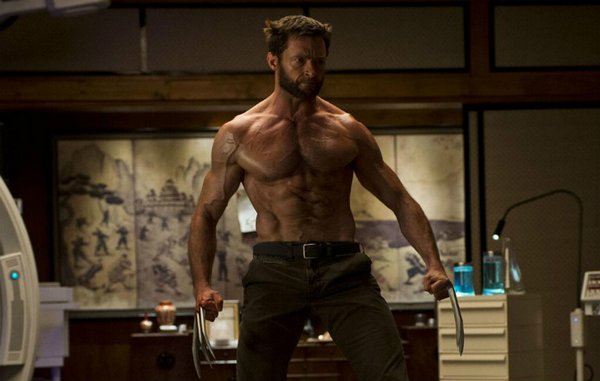
Loosely based—very loosely based—on the early story arc from Chris Claremont and Frank Miller’s eponymous comic, The Wolverine had several strong advantages going for it before 20th Century FOX settled on a director: one of Marvel’s most popular and enduring mutants, the return of Hugh Jackman for a sixth time in a role he owns, and one of the richer story arcs tied to the character’s many decades of adventures from the page panels. (Plus, it couldn’t possibly be worse than X-Men Origins: Wolverine.) As much as director James Mangold’s cinematic interpretation had going for it prior to pre-production, it’s a pity it only seldom succeeds—largely due to the decisions made way back before Darren Aronofsky was attached to helm. 

Taking place some number of years after the fallout from the events of 2006’s bald-faced lie of a movie title X-Men: The Last Stand, audiences find Logan (Jackman) in self-imposed exile, guilt-stricken from the death of Jean Grey (Famke Janssen, haunting and cock-teasing him in his dreams). He’s only pulled back into civilization due to his need to avenge the death of a Pleistocene-sized bear, illegally killed by that most dastardly of Hollywood stock character—the Mean Redneck. (Though, honestly, given how bad the ursine CGI was, its death probably qualified as a mercy killing.) Arriving in time to help the invincible superhero beat up a bar full of hapless plaid-clads is mysterious Japanese fighter/emissary Yukio (Ria Fukushima). Her employer, Yashida (Hal Yamanouchi), happens to be a very powerful CEO, whom Logan rescued from the atomic blast in Hiroshima 60-odd years ago. Yashida is nearing the end of his days and insists on paying his life’s debt to Logan—by relieving the superhero of his immortality. 

Though not part of the original comic, it’s nevertheless an intriguing element to explore with the character—a tragic Wagner-esque caveat to the power that makes him otherwise fearless. Between this classic theme and the dependable fish-out-of-water tale (the Westerner in Japan), there’s an adamantium-coated skeleton of a script here, but it’s so fitfully delivered that it’s difficult to stay interested between the Yakuza-dicing set pieces. Despite a scant number of intimate moments where the protagonist is wearing his shirt, The Wolverine, even at 126 minutes, feels rushed. It’s as though Mangold himself became exhausted knowing he had to reach the Big Final Action Sequence (BFAS). (If this particular 10 minutes of BFAS feels eye-rollingly familiar, it’s because the audience has already seen it in virtually every other superhero film of the last five years.) 

But beyond the aforementioned advantages this film enjoyed at the outset, Mangold deserves credit for exercising some restraint within a shared universe populated with over 50 years of established science fiction and magic. The fan-servicing cameos are kept to a bare minimum, and his lens never strays far from Jackman. This particular compliment might read as faint praise, but compared to the mutant-a-thon of the last film, it’s downright refreshing: Gavin Hood’s supposedly Logan-centric film tossed wave after wave of distraction in the form of Sabretooth, Silver Fox, Maverick, Deadpool, Wraith, Gambit, Cyclops, the Blob, etc.—as well as an additional truckload on non-superpowered cast members—making its title feel at times like the most Wolverine-flavored aspect of the entire affair. 

And although it barely merits mention at this point, given his now half-dozen (with another underway!) appearances as Wolverine, Jackman again proves why there’s no passing the baton to another actor while he’s still willing and able to play the role. As far as comic book film adaptations go, only Robert Downey Jr. has trumped Jackman for effective interpretation of a heroic role. Whereas Downey Jr. transformed Tony Stark from a somber, morose alcoholic to a breezy, sarcastic, high-functioning alcoholic, Jackman’s Logan has come a long way from rage-filled feral scrapper to a man who wears a scowl as a mask to hide centuries of suffering. In both cases, it’s difficult to argue the makeover doesn’t make for a better silver screen incarnation. 

As far as the other cast, the performances service the proceedings well—particularly Fukushima as the Comic Con Booth Babe siren, who goes all-in on the high-flying action. And, hell—go ahead and give Mangold and the studio another point for actually casting primarily Japanese actors in a film set mainly in Japan. Taken as a whole, The Wolverine is nearly as hit-and-miss as the rest of Mangold’s filmography: it ain’t Copland or his first-rate remake of 3:10 to Yuma, but nor is it Knight and Day or Kate & Leopold. However, given the enviable headstart this movie had at its greenlight, viewers may be disappointed they couldn’t do better than two steps forward, one step back.

Sunday, 28 July 2013

Assassin's Creed 3: Liberation Review

Similar to her Assassin’s Creed 3 counterpart, Aveline de Grandpré, star of Ubisoft Sofia’s Assassin’s Creed 3: Liberation and first female lead to appear in an AC title, is a hero torn between conflicting and changing worlds. A half-white/half-African America free woman living in late 18th century, on-the-brink-of-independence America would be a riveting and compelling enough character on her own, but add in the overarching AC mythos of Assassins vs. Templars, and things get even more complicated.

Assassin’s Creed 3: Liberation’s primary function is to provide Vita owners the chance to feed their AC lust when they aren’t around their consoles/PCs. As the events of the game are 99 percent unrelated to the events of AC3, Liberation is very much its own experience. So not only will you not gain any significant insight into the events of AC3, but there’s little to nothing revealed in terms of the overall AC universe, with the exception of the game’s premise, which is rather clever if, sadly, underdeveloped.

Instead of assuming the role of Desmond Miles and living through the memories of his ancestors, the player is meant to be someone who has purchased Abstergo Industries’ new personal Animus device, and is now reliving Aveline’s life. As you discover over the course of the game, Abstergo (aka the Templars) has tweaked Aveline’s story to paint the assassin’s in a less than favorable light. Similar to the appearance of Subject 16 in previous AC games, a rogue agent named Citizen E crops up at various points—after you have stumbled across him in your journeys since he isn’t marked on your mini-map--to give you an unedited look at certain key moments in the story.

I’ve always loved this sort of “pulling back the curtain” idea, but Liberation doesn’t follow through on it enough, which is a shame, because as it stands now, it just feels like an incomplete thought. It also doesn’t help that these “reveals” don’t do much to clarify the often confusing story, which in turn mitigates a lot of the dramatic oomph they perhaps were meant to pack.

Assassin's Creed 3

In action, Aveline moves fluidly up and across buildings, and unleashes carefully choreographed attacks capable of killing multiple enemies with just a few simple button taps. Performing these vicious takedowns is made even easier thanks to the new “mark and execute-ish”, multi-kill feature which lets you freeze the action and tap on up to four enemies in the heat of battle and automatically dispose of them in worry-free, cinematic fashion). The combat never really reaches the point where you feel like you need this kind of assistance, but it’s quite a sight if you remember to use it.

Liberation’s other unique gameplay feature—Aveline’s ability to don three unique disguises--ties directly into the game’s overarching themes of identity and empowerment. These outfits aren’t simply cosmetic (and each of the actually changes her walking animations, which is a great touch), as each affords Aveline unique abilities. So when dressed in her finest dressing gown, she can’t sprint or climb, but she does carry a dart-shooting parasol, and she’s able to charm targets, which lets her lead them to secluded areas for quiet kills. Her slave persona lets her blend in with servants and workers, carry crates, and even start riots by calling on the help of fellow slaves. She also has full climbing and running abilities, but she’s limited to small weapons in combat. When in full assassin’s attire, all of her abilities are available.

Assassin's Creed 3


There are several missions where you are forced to use specific outfits, and while it can be frustrating to have to walk a long way to get to a mission checkpoint because your outfit doesn’t “allow” you to run, I actually found the use of the outfits to be quite brilliant, especially when I realized just how “liberating” it was to be able to ditch the dress clothes and get back to my building-climbing ways in my proper assassin’s duds; like how I imagine Superman must feel when he enters a phone booth.

Speaking of Aveline’s physical prowess, she sports many of the same traversal and combat maneuvers as Connor. But while the gameplay comes very close to matching that of AC3’s, all of Aveline’s movements make it look and feel like she’s moving underwater. This sort of smooth delay is jarring at first, but after a while you sort of get used to it, even though it never really stops looking a bit odd. More than anything this just highlights one of Liberation’s more unfortunate running themes, namely the Vita’s limitations bumping up against the ambitions of the Ubisoft Sofia team.

In addition to Aveline’s heavy-yet-floaty movements, I came across a healthy number of bugs and glitches throughout my 10-hour-ish playthrough. There were numerous instances of guards materializing out of thin air despite having been killed seconds before, the screen going completely black (with the exception of the hud) after exiting dress shops, and I even encountered one game-breaking bug during one of the side quests that eventually ended up working itself out for reasons unknown after more than a dozen attempts.

Assassin's Creed 3

One of the most confusing and basically unplayable features is a mini-game of sorts that requires you to hold up the Vita’s rear camera to a light to reveal the contents of various letters found throughout the story and a few side quests (including the one that broke my game). The problem is there doesn’t seem to be any rhyme or reason to being successful. I held the camera up to a blistering white light with zero results and then rested the Vita on a desk, completely covering the camera, and it worked. Since you can’t progress until the letters are read, these instances bring the game to a grinding halt.

Should you find yourself needing a break from the single-player story, Liberation also features a management-style multiplayer mode that finds you fighting for control points spread out across the globe. Aligning yourself with either the Assassin’s or Templars, you pit your squadmates against rival agents in a purely numbers-based showdown. Once you use an agent, you have to wait 30 minutes (at least at first; not sure if there’s an option later to reduce cool down time) before you use them again, meaning that a lot of time early on is actually spent waiting to be able to play, which will most likely discourage all but the most diehard of the diehard AC fans out there.

Assassin's Creed 3

Assassin’s Creed 3: Liberation, like its protagonist, is torn between worlds. On the one hand, it’s very much its own beast, with unique gameplay and thematic elements that separate it from other AC titles. On the other hand, it tries to maintain the core AC experience, oftentimes at the expense of performance and stability, and while it largely succeeds in this regard, the overall result is a game caught in the middle of the franchise’s past and future. If you have a Vita, Liberation is a worthy addition to your library, but, in keeping with the “trapped between worlds” theme, this is most likely as much a comment on the current slate of Vita games as it is an endorsement of Liberation itself.

Sunday, 7 July 2013

Mortal Kombat Complete Edition (2013) PC Game

Mortal Kombat Complete Edition

Release Name: Mortal_Kombat_Komplete_Edition-FLT | Publisher: Warner Bros. Interactive Entertainment | Developer: NetherRealm Studios | Genre: Action | Date: July 4 2013 | Platform: PC | LAnguage: EN | Size: 9.35 GB


Description: 
After centuries of Mortal Kombat, Emperor Shao Kahn has finally defeated Raiden and his allies. Faced with extinction, Raiden has one last chance to save Earthrealm. To undo the Emperor’s victory, he must strike Shao Kahn where he is vulnerable…the Past. Driven by an all new graphics engine, the fan favorite series is back and presented in more gory detail than ever before. Mortal Kombat (known as Mortal Kombat 9 by the fans) introduces a number of game-play features including tag team and the deepest story mode of any fighting game. Players can choose from an extensive lineup of the game’s iconic warriors and challenge their friends in traditional 1 vs. 1 matches, or take on several new game modes. Introducing a number of game modes as well as an online experience, Mortal Kombat allows up to 4 players can battle “tag-team”- 2 players can team up in the new “Co-op Arcade Mode” or compete against another team online. The pumped-up Komplete Edition of this blockbuster fighter includes a variety of add-on packs, including four additional characters and 15 bonus character skins.

Features
Mature Presentation — Fatalities make a triumphant return to their original violent form as Mortal Kombat gives its fans what they’ve been demanding. Graphic details, never before possible are presented with the most sophisticated graphics engine in MK history. All New Game Play — By returning to its classic 2D fighting plane, mature presentation, and up to 4 player tag-team kombat; Mortal Kombat introduces an all new fighting mechanic that’s both accessible and provides the depth that fighting game players look for. Deep Story Mode — Mortal Kombat offers the deepest story mode of any fighting game. Players are taken back to the original Mortal Kombat tournament where they try to alter the events of the past in an attempt to save the future. Graphics & technology — Characters, environments and fatalities have never been presented with as much gory detail as in this next generation Mortal Kombat. From internal organs to the most “realistic” blood effects, Kombat has never looked this good. New Game Modes — In addition to an enhanced online feature set, Mortal Kombat introduces Co-op arcade mode amongst its many cutting-edge gameplay modes.

Minimum Requirement-
OS: (32-bit) Windows Vista, Windows 7, Windows 8 CPU: Intel Core Duo, 2.4 GHz / AMD Athlon X2, 2.8 GHz Memory: 2 GB Video Card: NVIDIA GeForce 8800 GTS / AMD Radeon 3850 DirectX: DX 10 Windows XP and DirectX® 9.0c and below not supported.


Mortal Kombat Complete Edition

Mortal Kombat Complete Edition

Mortal Kombat Complete Edition

Saturday, 29 June 2013

Disney Epic Mickey 2: The Power of Two Review - Xbox 360

Nobody knew quite what to make of Disney Epic Mickey when its strange and unusual concept art first hit the internet years ago. Upon release, Junction Point’s compelling exploration of lost and forgotten cartoon characters inhabiting a dark reflection of Disneyland called Wasteland suddenly being rediscovered by the most famous cartoon character of all time was one of our favorite games of 2010. Thankfully, Disney saw fit to greenlight a sequel, this time on all console platforms, and Disney Epic Mickey 2: The Power of Two continues what will hopefully be a long series of fresh takes on familiar material.

Musical Therapy

The Mad Doctor, a villain from the first game, has returned to Wasteland. He has had an apparent change of heart and a newfound tendency to turn everything into a musical number, which Oswald and his friends amusingly find very strange. Oswald believes the doctor deserves a second chance, which is a major theme throughout the game, and possibly a self-referential one. Still, something is rotten in Wasteland, and so Oswald’s friends summon Mickey to save the day with his Magic Paintbrush. This time he teams up with Oswald rather than competing with him, and the rabbit becomes an integral part of the gameplay.

As before, Mickey’s paintbrush can paint in “toon” objects to create platforms, befriend enemies, and create mostly beneficial or constructive effects. It can also fire streams of thinner, which dissolves said objects and generally causes destruction if you’re not careful. Also like the first game, which type of magic substance you use more often will impact the world around Mickey and how characters see him. Unlike the first game, many of your decisions are irreversible. Thin a building to the point that non-toon parts of it collapse, and that’s it – that building will be damaged for the rest of your game. Some may find this restrictive, but I found it added a nice layer of depth to the paint/thinner balancing act, and caused me to think about the results of thinner-oriented actions before just dissolving everything in sight to get to a treasure chest.

Oswald’s abilities are not morally significant, but they do change the way the game is played. His remote control can electrify things, stun enemies and operate control panels. He can also fly short distances with his helicopter ears, and even give Mickey a ride across gaps. A constant presence throughout the game, Oswald can be controlled by a second player at any time thanks to drop-in/drop-out split-screen play. The co-op does not support online play, but Epic Mickey 2 somehow feels like it should be a side-by-side experience. Each character plays uniquely enough that both players contribute in different ways to the puzzle solving and platform traversing.

Power of Two, Irritation of One

Oswald sticks around when you play solo, and that’s when problems arise. Because of the tandem nature of the level design and puzzles, Mickey and Oswald must work together frequently to surmount obstacles, defeat enemies and make progress. When you don’t have a buddy handy you have to rely on the AI-controlled Oswald to help you out, and this can be a risky proposition in some circumstances. You can call him over and give him close-range commands to activate his propeller ears or open an electrically-controlled object, but there will be times when you’d really like Oswald to activate that switch that’s only accessible due to the pressure plate you’re standing on while dodging incoming thinner attacks, but he’s too busy shocking offscreen enemies or staring at a wall.


The squirrely camera of the first game has been heavily overhauled, and requires very little babysitting or adjustment. Using an analog stick to aim Mickey’s paint is obviously a much more reliable control solution than a Wiimote, and it’s a joy to navigate Wasteland without worrying about Mickey’s positioning versus where the camera wants to point independently of your in-game actions. The welcome addition of a “hold the button to leave areas” feature also prevents accidental entering of shops and unneeded load times.

The main story is a bit on the short side, but tons of sidequests and optional tasks await Mickey and Oswald, and there is no lack of things to do. There are outfits for both heroes to collect, photos to take of hidden Mickey and Oswald heads all over the game’s levels, multiple paths and bonus items to gather in the classic cartoon inspired 2D levels, the ever addictive pin trading, and even some post-credits intrigue to investigate. The multiple solutions to many of the game’s puzzles and quests adds a strong element of replay value on top of all that.

Visual Justice

One of the few downsides of the first game was that Junction Point's brilliant reimaginings of classic Disney properties were not in HD, because the game was a Wii exclusive and thus trapped in standard definition limbo. Epic Mickey 2 is multiplatform, which means Wasteland is finally available in HD on the Xbox 360, PlayStation 3 and Wii U, and it is a true treat for Disney fans. Homages and references are packed into every frame of the game, and some truly obscure pieces of Disneyana (yes, that’s a real term) await discovery. You know they’re digging deep when there’s a prominent enemy based on The Black Hole.

Epic Mickey 2 once again pays heartfelt tribute to animation history, and does it with style and sincerity. As with the original game, anyone who loves Disney, Mickey Mouse, or just animation history in general will find something to enjoy here, and the fact that the game is a superb platformer and co-op title is icing on the cake. Here's hoping for many more adventures in Wasteland courtesy of Junction Point Studios.

Monday, 24 June 2013

Hitman: Absolution Review - Xbox 360

Hitman: Absolution is outstanding. Best in the series by a wide margin, and easily one of the best games released in 2012.


IO Interactive tapped into something unique in 2000 when Hitman: Codename 47 was released. There's always been this vision in popular entertainment of the well-dressed, urbane contract killer, and 47 emobodied that vision perfectly. Each new hit amounted to a murderer's sandbox, with makeshift weapons, disguises, and environment-specific features that all existed for the singular purpose of pulling off an improbable kill.

Now, more than a decade later, IO Interactive returns to the universe that launched the studio with Hitman: Absolution. The sandbox is much bigger and more elaborate now, but the song remains the same. Kill your target and don't be seen


More Than Just A Contract


Hitman: Absolution dives deep into the series' established fiction, though you won't need any kind of background with the previous games to figure out what's going on. An intro cutscene lays out the basic setup, which establishes that Agent 47's former handler, Diana Burnwood, went rogue in the time leading up to the game. She blew the whistle on 47's empoyer, the ICA. and the newly re-formed organization now wants her dead.


You quickly learn in the game's prologue that there's more to Diana turning on her former employer than a crisis of conscience over what the ICA represents. She's also protecting a young woman named Victoria. It's not clear why the girl or the USB drive-looking necklace that she wears is so important, but you eventually come to learn that it ties in with 47's own origins at a professional hitman.


The story's execution is surprisingly tight given the length of the game (around 15-20 hours on the Normal difficulty). This isn't groundbreaking storytelling, but it's a perfectly competent noir-ish thriller with some light sci-fi thrown in. More importantly, the plot never falls into the trap of becoming too convoluted. There's always a clear picture of the action driving 47 from location to location, especially now that the proceedings amount to more than a loosely connected series of contracted murders.


You'll take out your fair share of miscreants, of course, but you'll also find yourself on the run from the cops, embarking on fact-finding missions, and breaking out of capture situations. The unfolding plot aligns various forces against 47, which in turn serves to throw a variety of obstacles into your path, on both sides of the law.

Hitman: Absolution


Sandbox Murder

Fundamentally, Hitman: Absolution is the same game that it's always been. It's bigger for sure, offering a lot more flexibility in terms of how you approach any given situation. New features like Point Shooting -- which functions much like Splinter Cell: Conviction's Mark and Execute feature -- give a boost to the more action-packed side of the game, but a "proper" Absolution playthough still avoids violence almost entirely, except where specific targets are concerned. Same as it ever was.


While you'll still use many of the same tools that 47 always has -- a garrote, those signature Silverballer pistols, a variety of disguises -- there's one major addition to the toolbox that fundamentally alters the way you approach the game: Instinct. Pressing and holding a button (RB on an Xbox 360 controller) layers an enhanced view on top of the existing world, similar to Batman: Arkham Asylum/City's Detective Mode.


Using Instinct, you are able to see outlines of enemies and innocents alike in your immediate vicinity, even if they're on the other side of a wall. The range won't cover most of Absolution's large maps, but it's certainly large enough to work with when planning your stealthy advance. Instinct also highlights the movements of enemy patrols, allowing you to see who's coming and where they're headed.

Hitman: Absolution


Instinct is a game-changing feature, particularly on the lower difficulty settings (a "Purist" difficulty removes it entirely, along with everything other than your crosshair). It isn't foolproof, since you still can't predict when someone's going to suddenly turn around a see your sneaking, bald-headed self creeping up. It's also not terribly useful when you hide away in a dumpster or locker due to (seemingly unnecessary) limitations placed on your field of view in those circumstances.


In addition to giving you a clearer view of the world around you, Instinct also has more direct uses. For stealthy play, you can "spend" Instinct (via a diminishing on screen meter) to blend in when you're wearing a disguise. An enemy guard might realize you're not part of the team when he sees you disguised as one of his fellow lackeys, but using Instinct as you walk past effectively keeps your cover from being blown.


The possibilities for social stealth are greatly enhanced by this. Agent 47 sticks out in any crowd when he's wearing his trademark suit and tie, but the combination of a disguise with Instinct allows you to navigate your way through hostile environments that would have been impossible to explore in earlier games.

Hitman: Absolution


Credit goes as well to the Glacier 2 engine that powers Absolution. Every one of the game's 50+ discrete environments is brimming with life and personality, as well as any number of points of interaction. There are makeshift weapons to be found, shortcuts and secret access points accessible via ledges and air ducts, distraction opportunities... so much that it's almost daunting. Replay value is at an all-time high in the campaign since you can approach any challenge in a ridiculous variety of ways.


There are even dangling carrots to keep you going after that "perfect hit" in each mission. Any given map that you explore comes with a set of challenges, some of which are conflicting. Completing one might involve wearing every disguise available in that area while another might call for you to make it through without ever abandoning your suit. Completing these unlocks disguises and improves 47's skills, making him more effective in both the campaign and the new Contracts mode.

Hitman: Absolution


Murder By H.O.R.S.E.


Contracts is essentially Hitman's own take on H.O.R.S.E.. Instead of lining up impossible basketball shots, you're trying to best the Hitman-playing community with an impossible kill challenge.

The catch is that you've got to complete the hit (or hits) yourself first. Creating a Contract is easy enough. You select a map pulled from any of the chunks of campaign that you've played through already. Once you're in, you find whoever you'd like to target for your hit, mark him or her (with a Y button press), and execute the kill in the manner of your choosing.

Contracts automatically tracks the type of weapon used, the disguise you're wearing, whether or not the body was hidden, and the like, setting these as optional kill objectives for those who would take on your Contract. What's really neat about Contracts is the way it fundamentally changes how you approach the game. You're stepping into the map of your choosing with no specific goal beyond "select up to three targets and kill them however you like."

Instead of trying to out-think an AI-controlled enemy force, you're working to develop enough of an understanding of the AI's inner workings to create advantageous kill scenarios that are difficult for others to replicate.

Hitman: Absolution


That said, Contracts still could have used more depth. You might, for example, want to set a kill condition that involves using a specific, unique revolver that is only found on the map you've selected. Contracts only recognizes firearms by class, however, which means that any revolver will satisfy the optional kill objective.

There's also no way to have a contract condition depend on the murder happening in a specific location. These are small complaints given how flexible and entertaining Contracts is in its current, finished form. You earn money for completing contracts that can then be spent on new disguises and upgrading a select assortment of Agency weapons, but the dangling carrots are secondary to the raw level of fun that you'll just have taking on friends' contracts and pitting them against your own.

Hitman: Absolution

The Perfect Kill


Hitman: Absolution is a triumph, top to bottom. Fans of the series can look forward to the best entry yet, without question. In a year that has already seen some of the best stealth games of this generation, veteran developer IO Interactive delivers an experience that still manages to stand out. This is an outstanding effort from the veteran developer, and an absolute must-play for anyone who embraces the thrill of striking from the shadows and slipping away unseen.